
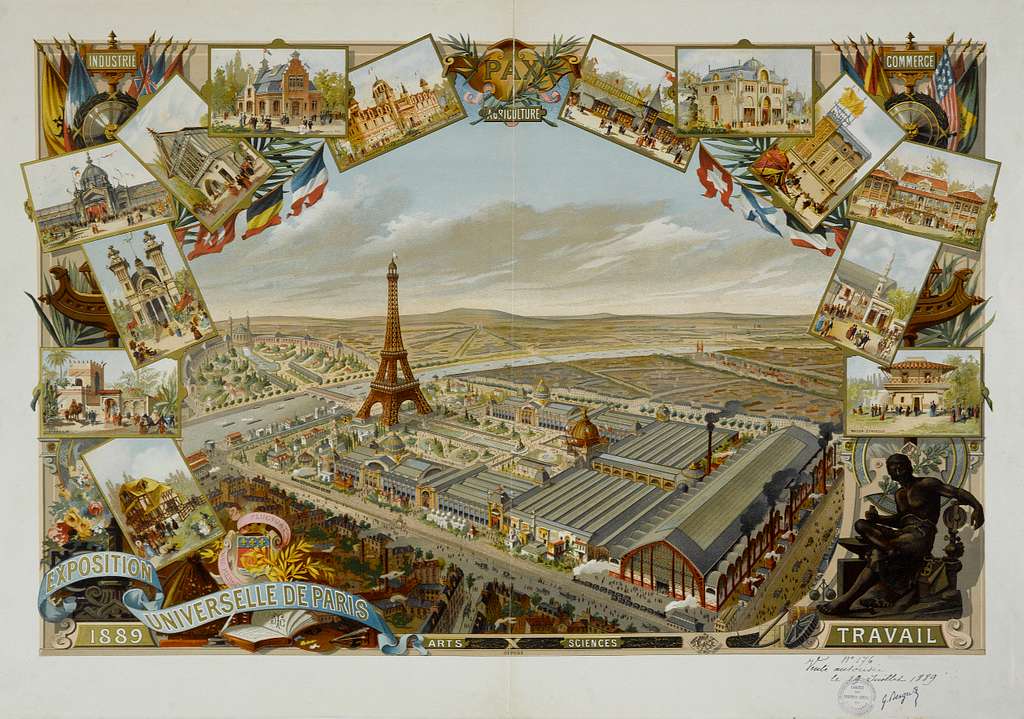
When I first wrote my series about the inspiration and history of The Grande World Exposition of 1890, I divided it into three parts. While Canada’s Wonderland was happy to post two segments, the third one was seen as too tangential to be featured on the park’s official website. I fully understand and agree with that decision, but I do think there’s some interesting context to be gained from the part that never saw publication.
Presented below, more or less as it was written in 2021, is an exploration of how World Expos have influenced the development of theme parks as an industry. Unless otherwise noted, all photos used are in the public domain.
Exposition Universelle de 1889: Paris, France
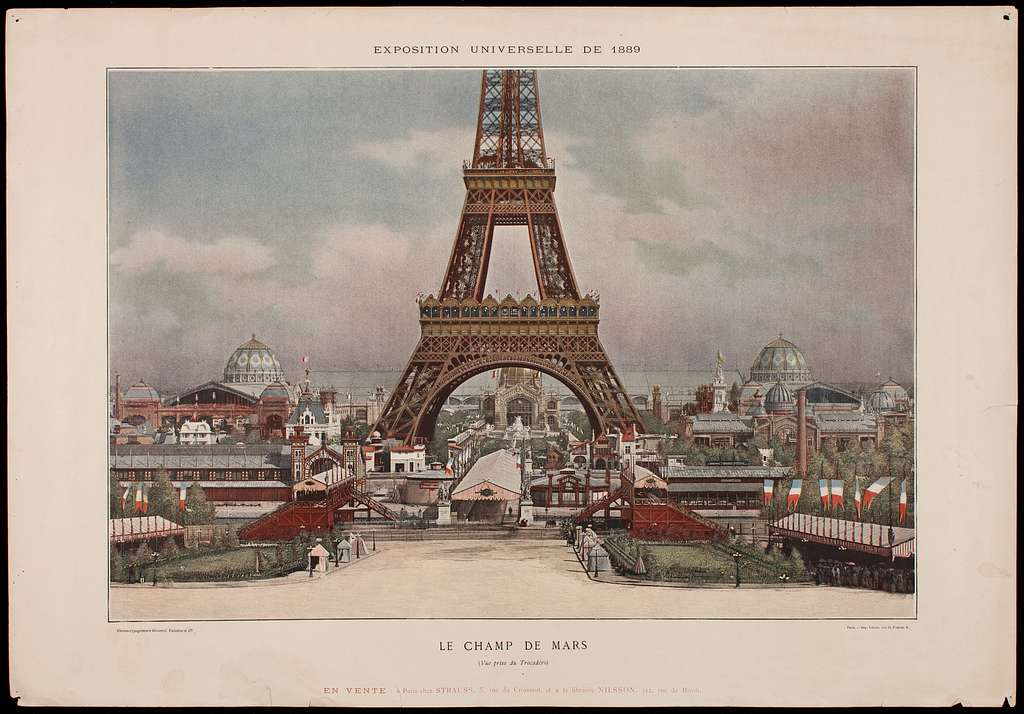
The Exposition Universelle de 1889 was held in the heart of Paris, marking 100 years since the start of the French Revolution. This expo is notable not only for being just one year prior to Wonderland’s own World Expo setting, but also because the Eiffel Tower, one of the most iconic manufactured structures of all time, was built specifically for the expo! It was the tallest artificial structure at the time, perfectly encapsulating the advancements in engineering and construction of the time.
Believe it or not, this monument of technical and architectural achievement was only visited by about one in 16 of expo attendees. What’s more, Paris originally intended to remove the tower just 20 years after it opened, with many residents considering it nothing but an enormous eyesore. Ultimately the unique structure was deemed impressive and useful enough to become a permanent radio tower and tourist attraction. Paris now sees nearly seven million visitors access the various levels of the Eiffel Tower annually, and more than 10 million around the base of the original “Iron Lady.”
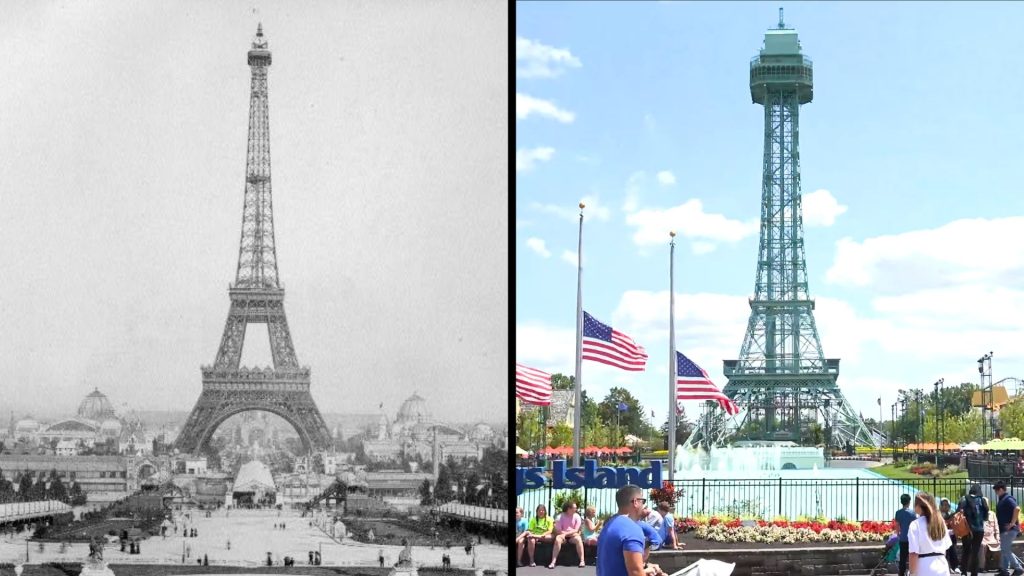
For a bit of comparison, the two original sister parks of Canada’s Wonderland, Kings Island and Kings Dominion, both feature a ⅓ replica of the Eiffel Tower, standing as the centrepiece for each park. Though the two parks do not release official attendance figures, annual reports from AECOM and TEA estimate the two parks coming in below seven million guests annually combined and of course not everyone is riding the elevators up to the observation deck.
World’s Columbian Exhibition: Chicago, Illinois, USA. (1893)
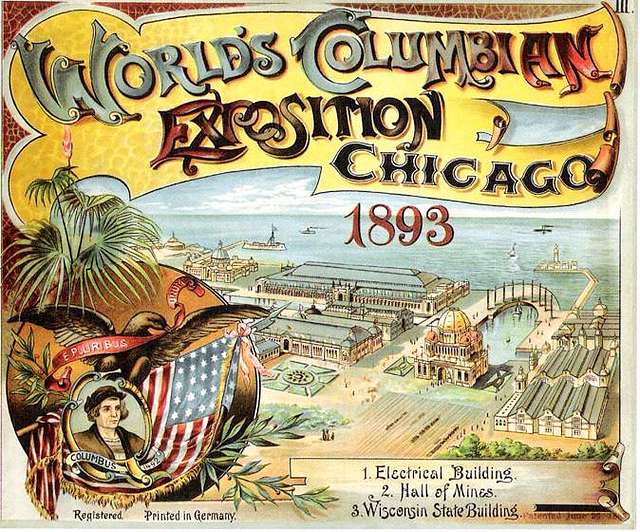
Perhaps the most influential world expo of all was the World’s Columbian Exhibition in Chicago, 1893. In addition to being a huge step forward in Thomas Edison’s electrical advancements (requiring three times as much lighting power as the city of Chicago itself) and featuring the first “Women’s Pavilion” dedicated to the work of women in all fields, the World’s Columbian Exhibition was the actual origin of the word “midway” as we know it today!
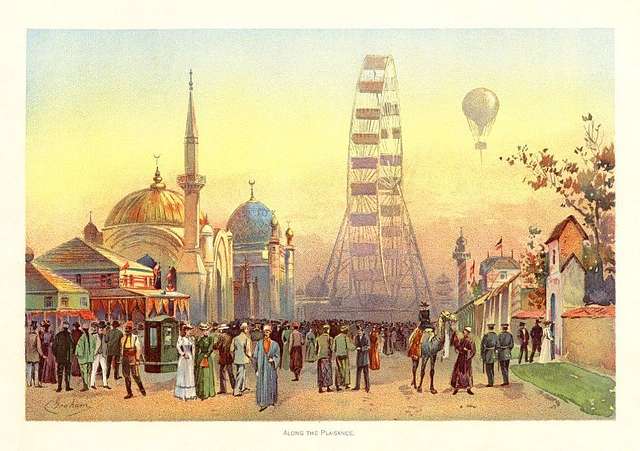
The Midway Plaisance was a mile-long (1.6 km) strip dedicated to entertainment of all kinds! Virtually every amusement park, carnival, theme park, and fair took inspiration from this layout, featuring games, food stalls, and other attractions all along the strip. But there was one attraction along the midway which stood taller than all the rest, designed to rival Eiffel’s “eyesore” as an even greater engineering marvel.
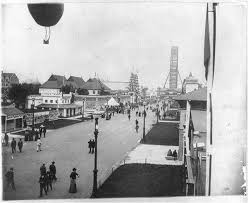
Towering above the Midway Plaisance was a new 264 foot tall (80.5 m) sight-seeing invention by George Washington Ferris Jr, named the “Big Wheel.” Yes, the very first “Ferris Wheel” debuted at a world expo, standing taller than Drop Tower, Behemoth, and Yukon Striker with enclosed standing-room cabins for more than 2,000 riders at a time.
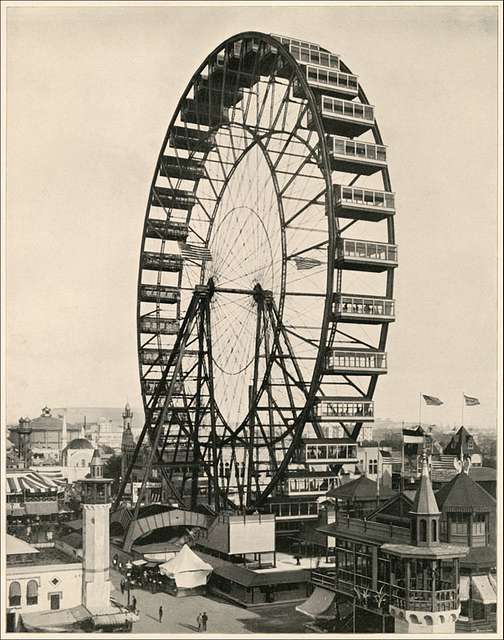
Most people of that era had never been in anything higher than a three-storey building, so you can imagine how incredible it would be to look down on the world from such a height for the first time. They had plenty of time to enjoy it as well since the ride lasted about 20 minutes including nine minutes of uninterrupted rotation.
1964/1965 New York World’s Fair: New York, New York, USA
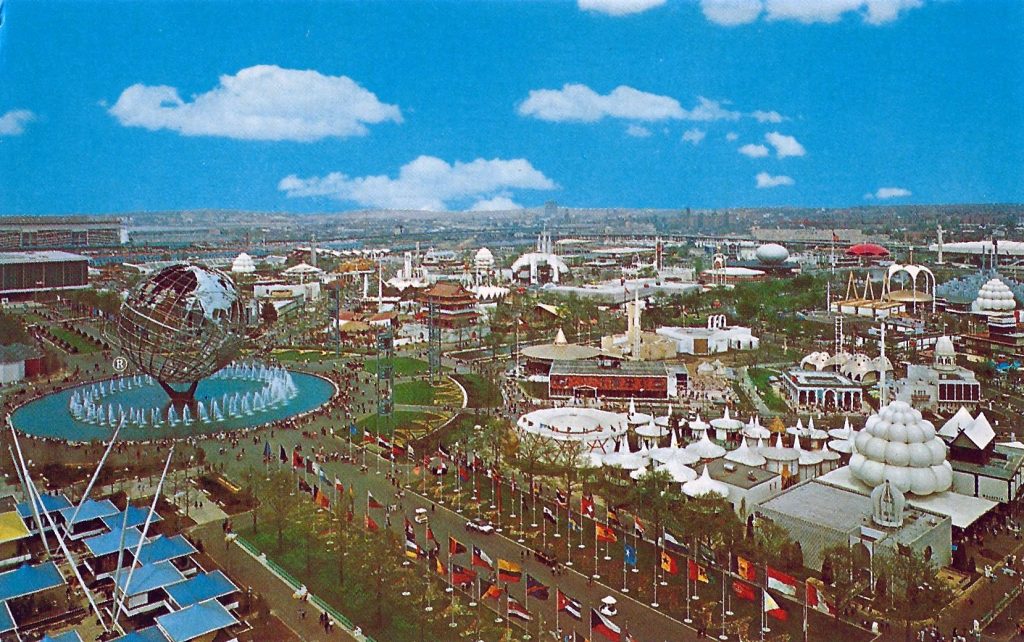
The Bureau International des Expositions, which sanctions all official world expos, actually didn’t approve the 1964/1965 New York World’s Fair due to two violations of the rules: First, the organizers wanted to extend the the expo beyond the maximum duration of six months. Second, they charged exhibitors a site-rental fee if they wished to build a pavilion.
Despite this unofficial status, the 1964 expo attracted nations, businesses and innovators alike, including the eager theme park developer Walt Disney. Disney was able to use the expo as a testing ground for his then-new audio-animatronics as well as a few new ride systems. The most notable of Disney’s contributions for the fair was the infamous “It’s a Small World” ride, perfectly encapsulating the international representation of world expos while being “a salute to UNICEF and all the world’s children.” At the conclusion of the fair in 1965, Walt Disney brought his pavilions back to Disneyland to be installed as permanent attractions.
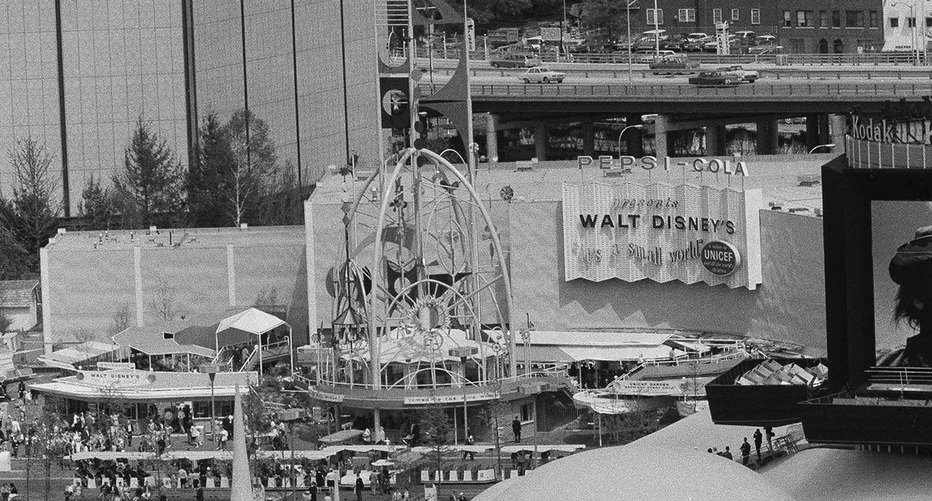
Disney’s appreciation for world expos didn’t end with the 1965 New York World’s Fair, though. He envisioned a permanent world expo with persistent pavilions representing (and supported by) various countries, a dream realized with the introduction of EPCOT’s “World Showcase” in 1982. Of course this idea (minus the international sponsorship) was already implemented a year earlier as The Grande World Exposition of 1890 opened at Canada’s Wonderland in 1981.
Expo 67: Montreal, Quebec, Canada (1967)
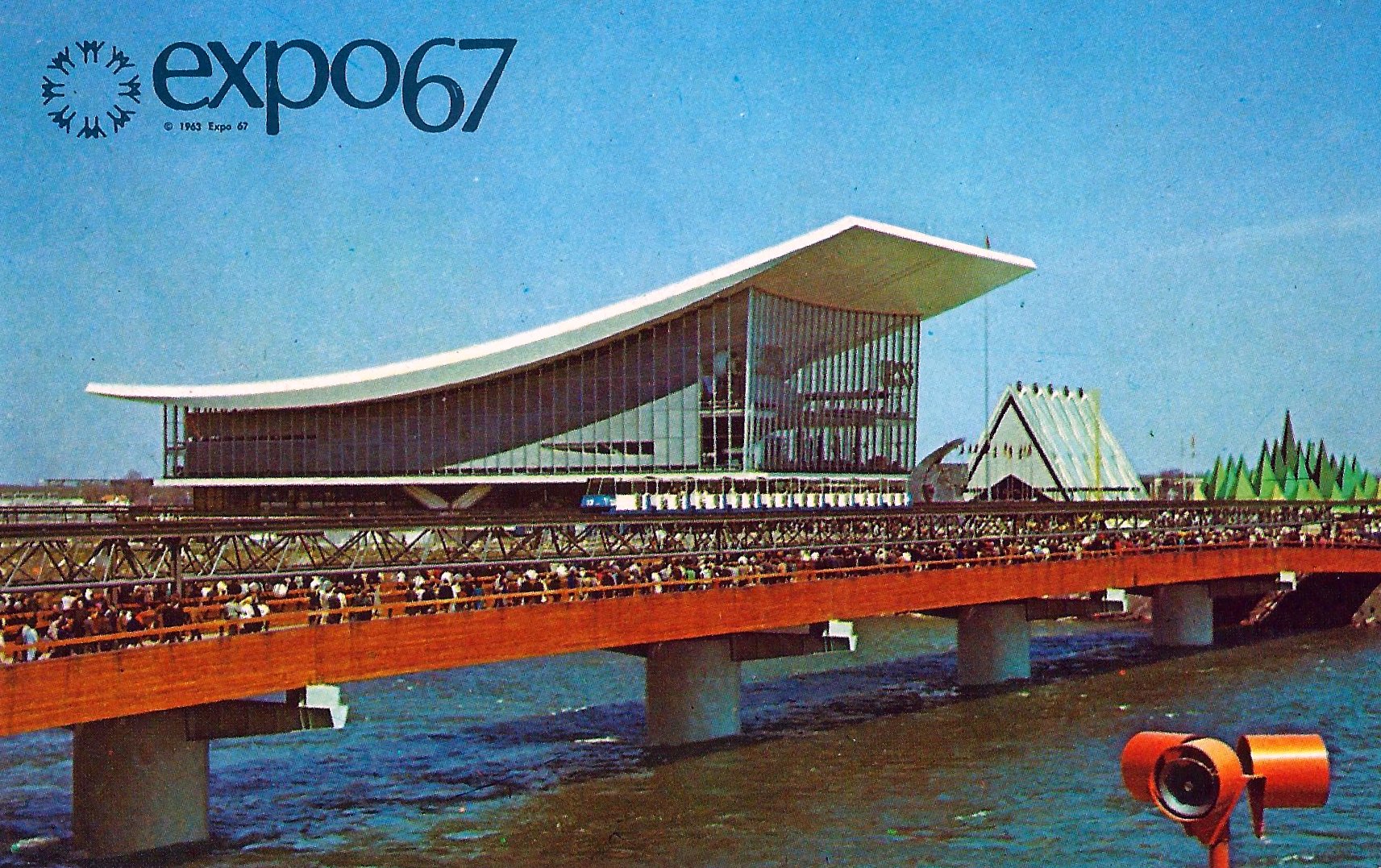
Canada has hosted a few “specialized expos” over the years, but it has only hosted one officially recognized World Exposition. After four years of preparation, Expo 67 in Montreal opened on a greatly expanded island, made from dirt taken from construction of the city’s underground train service. The expo coincided with the 100th anniversary of Canada’s Confederation as well as the 325th anniversary of Montreal’s founding. Over its six month run, Expo 67 proved a huge success, greeting more than 50 million visitors — that’s two and a half times Canada’s population at the time!

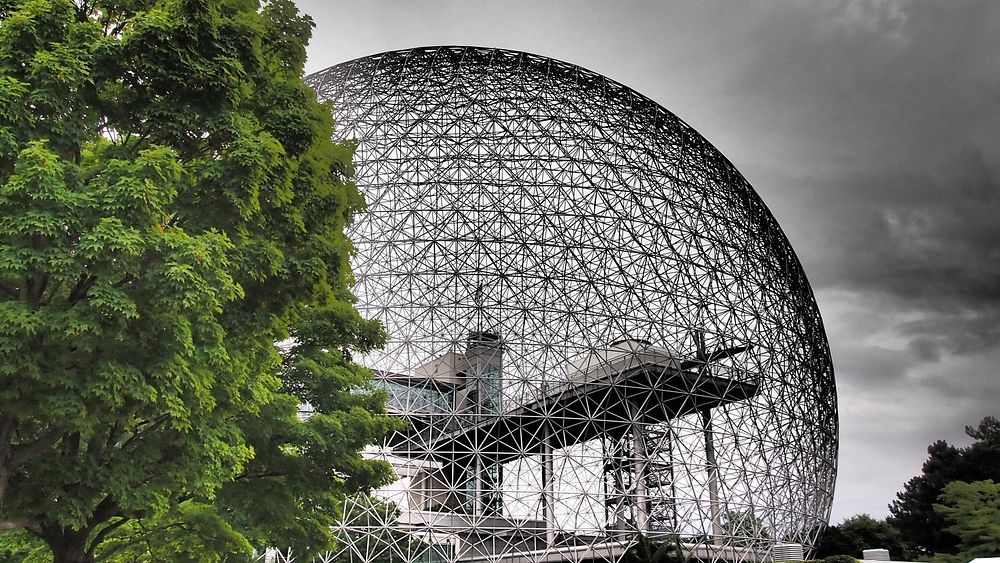
At the conclusion of Expo 67, several international pavilions remained as a new exhibit, known as “Man and His World,” until multiple fires and abandoned or vandalized structures caused its final closure in 1984. Some of the other structures built for the expo remain, such as the Montreal Biosphere (now operating as an environmental museum) and the futuristic “Habitat 67” (now functioning as a condominium).
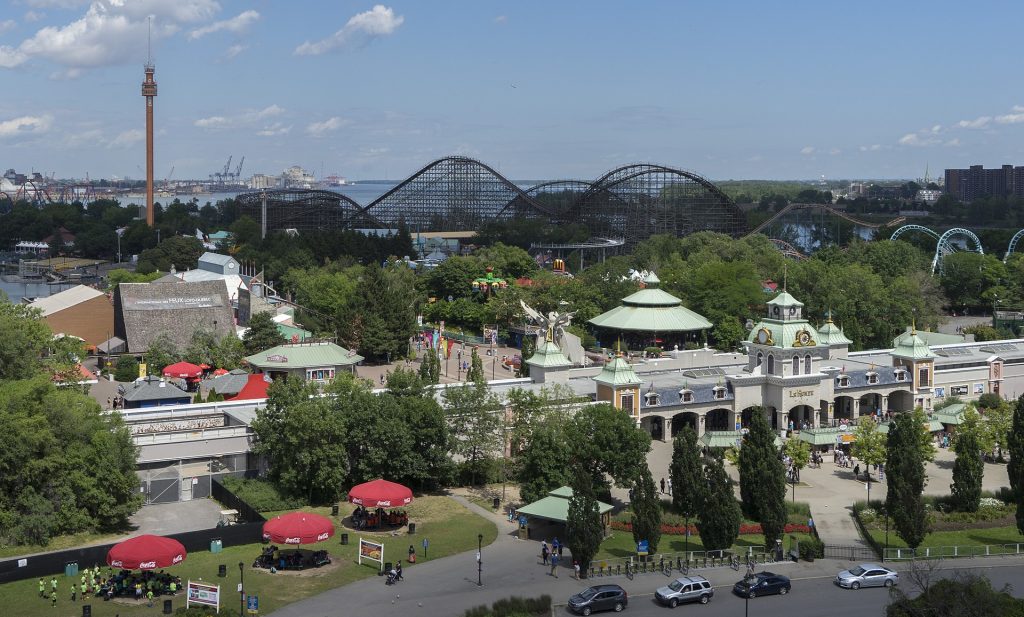
On the ride side of Expo 67, an entertainment complex operated as part of the expo and still exists as a full fledged amusement park named La Ronde. The connections between World Expositions and amusement parks can’t get any clearer than it is here with Montreal’s manufactured island on the St. Lawrence River.
Contemporary World Expos
While there are still world expos today, they certainly look a lot different than they did in the 19th century. The upcoming Expo 2020 Dubai in United Arab Emirates, delayed until this October due to the COVID-19 pandemic, will be the first expo in the Middle East, Africa and South Asia region.
[Update: Obviously Dubai’s expo happened several years back, ending four years ago last month. Expo 2025 Osaka, Kansai, Japan also took place last summer, incidentally on an artificial island like Expo 67. The next official World Exposition is scheduled for 2030, in Riyadh, Saudi Arabia.]
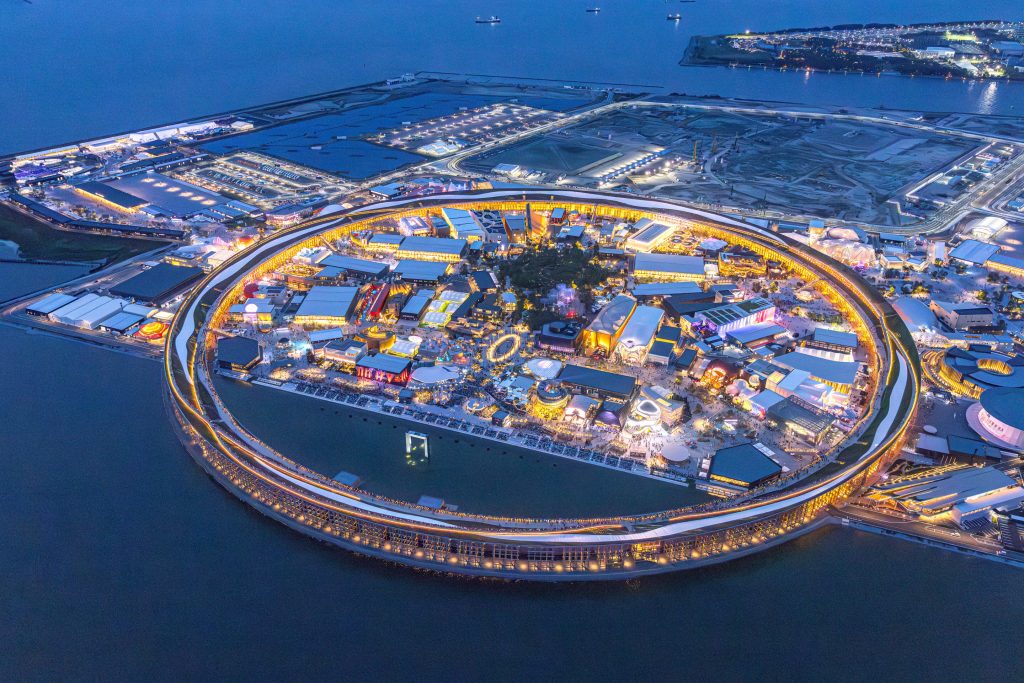
But as amusement parks continue to feature far more complex and impressive rides than would be present at any temporary exhibit, midway attractions have all but disappeared from modern expos. Amazingly, this is precisely what’s happened at Canada’s Wonderland, with high-thrill flying and jet coasters replacing the transportable flat rides and old-fashioned log flume.
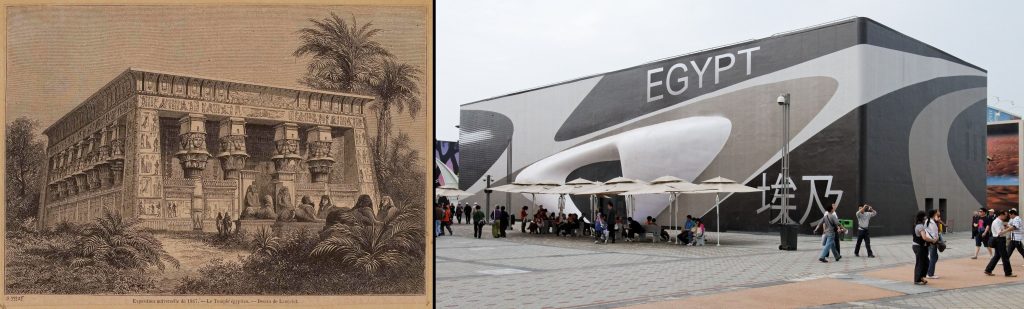
At contemporary expos, countries are less focussed on reflecting their past than they are on the primary goals of world expos: sharing innovations and presenting a vision for the future. As a result, while the pavilions typically still reflect some unique characteristics, historic architecture may not be featured as prominently as it once was.
Perhaps then it’s appropriate so many historic pavilion designs at Canada’s Wonderland have also faded away over time. But I for one hope to see the golden era of world expos recreated once again in The Grande World Exposition of 1890.
Leave a Reply